
The Nurturing Qualities of God
SHARE THIS POST WITH OTHERS
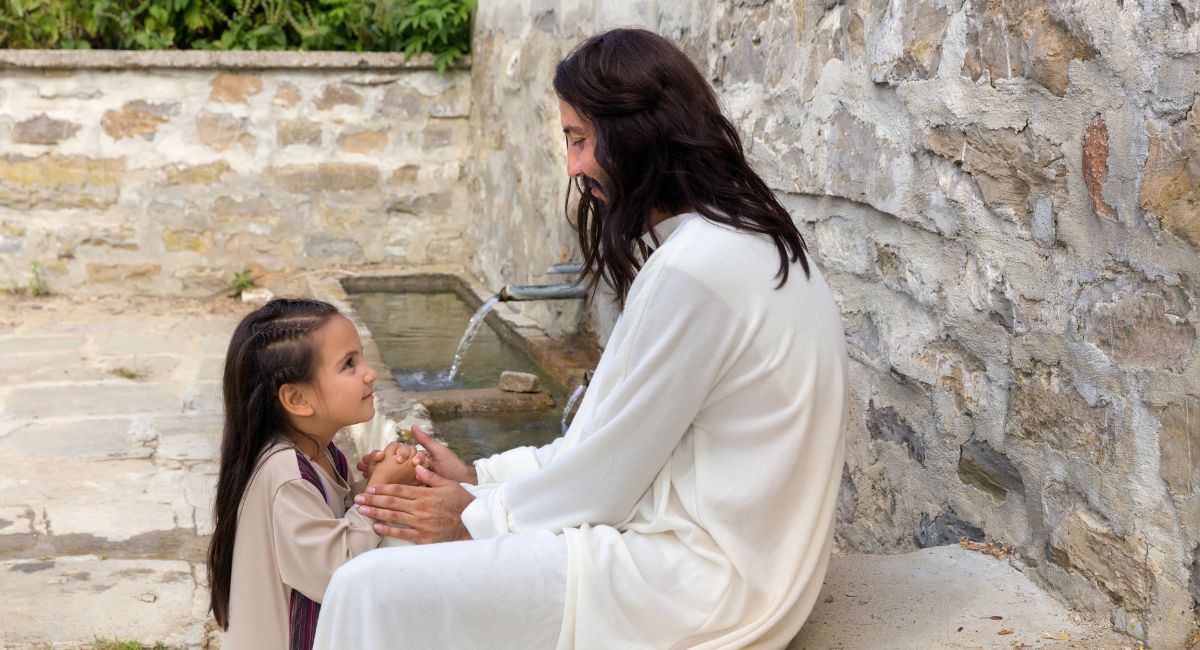
The concept of God’s care and compassion is a central theme throughout the Bible. Although the Scriptures – and Jesus as well – refer to God as “Father”, there are numerous examples of God demonstrating nurturing, caring attributes similar to those of a mother.
SCRIPTURAL DESCRIPTIONS OF MOTHERLY QUALITIES
Isaiah 49:15 (NIV) points out that God’s love is even greater than that of a nursing mother: “Can a mother forget the baby at her breast and have no compassion on the child she has borne? Though she may forget, I will not forget you.” It is physically painful for a mother to be separated from her nursing infant for any length of time. God is even more compassionately attuned to His children than the best, most loving, dedicated mother. He will never forget those He loves. He has even “engraved you on the palms of [His] hands” (Isaiah 49:16a) as a sign of His unwavering commitment to His people.
In Matthew 23:47 and Luke 13:34, Jesus compares God (and Himself) to a mother hen: “How often I have desired to gather your children together as a hen gathers her chicks under her wings.” In Exodus 19:4, God explains how He has carried the Israelites “on eagles’ wings” in bringing them out of slavery in Egypt. In Deuteronomy 32:11, at the end of the Israelites’ wandering in the wilderness prior to entering the Promised Land, Moses compares God with a mother eagle who catches and bears her young on larger wings until they learn to fly independently.
God compares a mother giving birth to His own agony and readiness to deliver His people when they were in exile (Isaiah 42:14). He responded to being criticized by the Israelites over His decision to choose the King of Persia (Cyrus) as His instrument by asserting they “forgot the God who gave [them] birth” (Deuteronomy 32:18). And multiple New Testament references speak of the act of coming to God through faith in Jesus Christ as being “born again” (John 3:3-7; I Peter 1:3, 23; I John 3:9, 5:18; John 1:12-13).
“Shaddai” is one of the many Hebrew names used to describe God. First appearing in Genesis 17:1 when He appeared to 99 year old Abram, it appears 48 times in the Bible. The word Shaddai has two alternative meanings, the first literally meaning “mountain” and commonly interpreted “Almighty.” This would describe qualities of protection and strength. A second meaning is “breast” indicating sustenance or nurturing; this reflects God as a life-giving nourisher similar to a caring nursing mother.
All the authors of the Bible refer to God as “He” and use masculine imagery of Father and husband. Feminine language, on the other hand, is used to describe His caring and compassionate nature. In Isaiah 66:13 God describes Himself this way, “As a mother comforts her child, so will I comfort you.” When we think of motherly love and its influence on us, these words come to mind: nurturing, unconditional, protective, unearned, freely given, comforting, security, unselfish, tenderness, compassionate. Surely God is the supreme example of these attributes!
MOTHERLY EXAMPLES FROM THE NATURAL WORLD
We have examined Scriptural descriptors of God demonstrating care and compassion as a mother would do. Further evidence of His divine love for us can be seen in God’s creation. Romans 1:20 explains that “God’s invisible qualities…and divine nature have been clearly seen [and] understood from what has been made”. We can understand so much about Him by observing the world around us. He has given examples of maternal care in the animal world where primal mothers defend their offspring with devotion.
- The European Bee-Eater mother bird carefully plucks stingers from insects before feeding them to her baby chicks.
- Zebra deer mothers keep their babies hidden from predators for bonding before exposing them to the outside world.
- Mother alligators gently carry their little ones in their mouths, on their back or head as they swim, and guard them fiercely with their strength.
- Dolphin mothers have unique whistles for communicating with each calf (similar to individual names) and rarely leave them alone.
- The polar bear mother fasts for months in her den, giving birth and nursing her cubs through long Arctic winters, to give them her warmth and nourishment.
- Penguin moms regurgitate food for their chicks and shield them from frigid winds with their bodies.
- The hummingbird mom builds a tiny nest from sticks and straw, binding it together with spider silk so that it will be strong but also can be expanded as her chicks grow.
- Warthog moms dig a burrow for their piglets, defending them with her sharp tusks. When nursing them, she kneels down to make herself smaller so they can reach her.
Do you see any metaphors from the animal mom-world that apply to God? We are each individuals to Him, not treated as a group or crowd (dolphins). He gently carries us and guards us fiercely (alligator). He protects us from Satan, the predator of our souls, and defends us (Zebra deer, warthog). He has humbled Himself to take on human form, making it possible for us to “reach” Him (Warthog) and protected us with His body (polar bear, penguin).
Although God isn’t visible to our physical eyes, there is visible evidence all around us of His existence and loving character. This comforting sense of His compassionate care is accompanied by a responsibility to recognize and respond to Him through worship. (Romans 1:20 makes clear that we are “without excuse” if we ignore or dismiss the evidence “clearly seen” all around us.)
HOW CAN WE CARE FOR OTHERS AS GOD CARES FOR US?
Yes, mothers and grandmothers are critically important in the lives of their families. We can learn much from studying how God demonstrates qualities of motherly love. “The Lord God [is] compassionate and gracious, slow to anger, abounding in loving devotion and truth” (Exodus 34:6). To care for others is to see them as God sees them: cherished, made in God’s image (Imago Dei), in need of and deserving of love. Jesus Himself was moved by compassion for the crowds of people “because they were harassed and helpless, like sheep without a shepherd” (Matthew 9: 36).
We are called to be vessels of God’s gracious love and care. Some practical ways to implement this calling would include:
- Give undivided attention and be fully present. God is always ready to listen to us; we can strive to put down the phone or remote to use our eye contact, body language, and time to demonstrate care for another person.
- After attentively listening with understanding, offer encouragement. This is not necessarily the same as giving advice! (As a matter of fact, a good rule of thumb is unasked-for or unsolicited advice is interpreted as criticism!)
- Serve humbly to meet needs as you are able. Keep in mind healthy boundaries but remain willing to make sacrifices as the Lord leads.
- Pray for one another. Pray privately and with others. Prayer is our primary means of staying in close touch with God and is a gift we can give as well.
- Bring joy, hope, and the light of the gospel wherever you go. Jesus is the best example of true compassionate, sacrificial care when He died on the cross for our sins.
Just as the Bible contains some feminine divine imagery as part of describing God’s care for His people, we can also display this true mark of a Christ-follower as we demonstrate loving compassion to others.
Prayer:
Lord Jesus, thank You for all the ways You demonstrate loving compassion and devoted care to me. Your presence is not hidden – I see evidence of You all around me. Your creation is a living testimony to Your character and I want to respond with worship and obedience. Help me to see others as You see them and be willing to be a reflection of Your love in practical ways to those around me. Thank You that I am dearly loved by You! Amen.
Scripture references are in New American Standard Bible (NASB).