
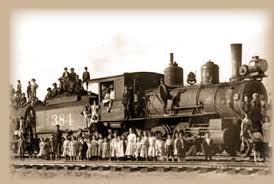
From 1854 to 1929 Orphan Trains transported nearly 200,000 destitute children, mostly from Boston and New York, to families across America. Most of them were immigrant children orphaned, abandoned or neglected by their families. When the train arrived at a train stop or station, children would pile off the train and line up for inspection by waiting adults who poked and prodded trying to ascertain who would bring the best value to their farm or business. Those not chosen would pile back on the train and head for the next stop. While some children found good homes and families, many were exploited and abused by those who picked them. They were treated like indentured servants or worse—nothing more than property.
Today children are still exploited and abused, frequently in more dehumanizing ways than any Orphan Train.
We dare not think our heavenly Father is blind to it, or that He will not demand justice. Not only did Jesus say we are to welcome children—and in so doing welcome Him—but He also said, “See that you do not look down on one of these little ones.” He is watching.
The real sense of what Jesus said is better expressed as “don’t despise, disdain, or think little or nothing of these precious ones.” His words speak to more than the obvious examples of physical abuse. His concern is the heart—an attitude towards children that may be tempted to see them as persona non grata—creatures with little or no value. We may say we love children, but if our attitude towards them expresses disdain or annoyance, our actions will reflect our attitude.
Obviously, the harsh realities of child abuse are a tragically apparent when children are viewed this way, and it ought to make us angry when we see it. However, child abuse is not the only evidence of disdain towards children. What about these?…
- Grandparents who choose to live in age-segregated retirement communities that don’t allow children except for limited visits, instead of staying intentionally involved and engaged with their families.
- Churches that communicate this look-down-attitude when they keep children out of the ‘adult’ worship services for fear they may disrupt our adult time. I wonder what Jesus would say to about that if He were to attend? Maybe that’s the problem. Perhaps He doesn’t attend.
- Older adults who refuse to serve in children and youth ministry opportunities because they’ve “already done their time,” as though working with children or youth is equivalent to doing time.
It is right to demand justice for abused children, yet I wonder if we understand how seriously our Lord takes some of our less obvious ways of looking down our noses at children? Jesus’ command to not look down on one of these little ones originates from the deep wellspring of our Savior’s heart for the children. Should we look at them any differently?
Please don’t misunderstand. I’m not talking about making children the center of your universe. I am talking about valuing them as a precious treasure, made in the image of God and placed in your care by the heavenly Father. I’m talking about building a legacy of faith and grace for the next generations—including, but not limited to your grandchildren.
Imagine what God would do through an army of older adults who take up strategic roles as teachers and workers in our children’s ministries and our neighborhood community programs, instead of turning up our noses and refusing to get involved? Everybody would be blessed. I think Jesus would be pleased too—don’t you?
GRANDPAUSE:
“See that you do not look down on one of these little ones.” -Jesus (Matt. 18:10)
“We worry about what a child will become tomorrow, yet we forget that he is someone today.” -Stacia Tauscher





0 Comments