
After observing another year of Black Friday madness (now Thanksgiving Thursday madness) I find myself wondering if there is anything really left of what Christmas used to be. Was there ever a time when Christmas was about Christ, and nothing else? Where did this strange holiday really originate? Is what we call Christmas today anything like what it was intended to be?
There is a lot of confusion today about the traditions of Christmas—where they came from and what they mean. I know that as a child Christmas held a special intrigue and anticipation for me. The lights, the decorations, the Christmas songs and Christmas Eve Candlelight Service were a huge part of Christmas in our home. And admittedly, so was Santa.
But how do we sort through the confusion and the merchandise marketing of today to drill down to what Christmas is really about? Allow me to give you a quick crash course about the origins of Christmas. Perhaps something in this overview will be of help to you as you try to make Christmas for your grandchildren something more than filling Christmas wish lists and Black Friday frenzies.
Phil Vischer, creator of Veggie Tales and Jelly Telly, has just released a new DVD called Buck Denver Asks…Why Do We Call it Christmas? Phil seeks to provide some answers for families about some of our modern traditions. For example, he clarifies the origins of our modern concept of Santa Claus and how it has changed through the years.
Originally, the Church celebrated Christmas simply as a religious observance of the virgin birth of Christ, and as surprising as it may seem, Santa was not part of it. Christmas was entirely about worship and celebrating the miraculous incarnation of God into our world to provide for our salvation. Christmas pointed to Easter. Easter, as Phil Vischer suggests, was the ‘superbowl’ of Christian celebrations—not Christmas.
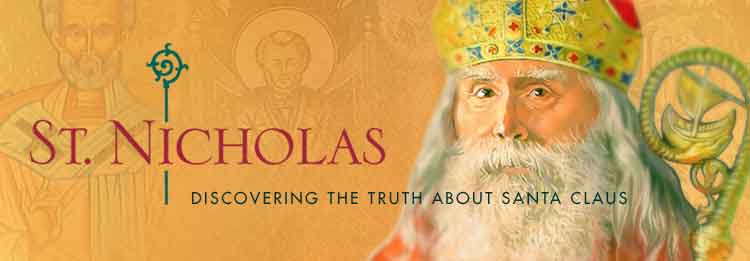
Furthermore, as difficult as it may be to imagine today, the idea of gifts was never part of the earliest Christmas celebrations. That was something that came about because legends surrounding a fourth-century Greek Bishop named Nicholas (St. Nicholas in the Catholic Church).
Allegedly, Nicholas decided to use the fortune his parents left him to help poor children in his parish. One of the legends that surrounded his philanthropy was that he would put gold coins in the shoes of poor children left on the stoop of their homes. Over time the stories grew. Some accounts say that St. Nicholas dropped bags of coins down the chimney of one poor family because the father had no money for a dowry for his daughters. The bags apparently dropped into stockings that had been hung in the fireplace to dry. Hence, our stocking tradition.
Over time, St. Nicholas became Christ Kind (Christ Child) among the Dutch, and Father Christmas in the UK from whom gifts were given at Christmas to poor children. (Christ Kind became known as Kris Kringle in the USA) Dutch settlers in America replaced Kris Kringle and St. Nicholas with the name Sinterklaas. Their stories and the influence of Clement Moore’s ‘Twas the Night Before Christmas led to the creation of our modern Santa Claus in which getting gifts became a Christmas tradition for all children (at least if they were good).
What you might not know is that these stories and legends originally had nothing to do with Christmas as a religious holiday. They were simply another non-religious festivity of the Christmas season. In fact, St. Nicholas day was historically a different day than Christmas (December 6th), that is, until merchants in the late 19th century saw the financial benefit they could gain by combining the two. Once these two traditions were combined into one, Christmas as a profiteering scheme was unleashed, and the religious significance minimized. It’s time to revive the truth about Christmas in our families before all is completely lost.
I suggest you get a copy of Buck Denver Asks…Why Do We Call it Christmas? to watch with your grandchildren if you have the opportunity. Perhaps you can even include it as part of your family tradition and use it as a way to begin the conversation about what Christmas really is about. I urge you to seek any opportunity to build a more Christ-honoring focus during the Christmas season pointing to the reason for His coming that we celebrate at Easter.
Consider ways to turn gift exchanges into teachable moments about giving. I don’t know about you, but my grandchildren have their Christmas gift lists made out before Thanksgiving. I am making plans to use this time to help them learn about giving rather than receiving. It will require resolute, gracious intentionality to recapture Christmas as a time of worship and thanksgiving for God’s gift of His Son as our Savior. If we are to help another generation develop a spirit of generosity like Nicholas who gave to the poor, rather than the ‘all-I-want-for-Christmas’ spirit of our age, we will need to start the conversation, but do so with kindness and generosity ourselves.
I’m not proposing turning into a Scrooge or a Grinch, but I am suggesting that we grandparents (and parents) need to be more intentional about teaching what is true and noble and praiseworthy. I want my grandchildren to learn the joy of giving, not always wanting, demanding, and expecting more for themselves. I want to bless them with gifts that mean something and the joy of seeing others blessed as well. After all, Jesus did say “it is more blessed to give than to received,” and what greater joy could we have than to see our grandchildren walking in the truth?
Send me your stories of how you are helping your children and grandchildren learn the truth about giving. I’d like to collect a list of effective ways you are promoting the real meaning of Christmas in your family and then share them with our readers and our seminar attendees.




0 Comments