Christmas Isn’t Over… It’s Just Begun!
SHARE THIS POST WITH OTHERS
For most of us Christmas is over. We have unwrapped all the gifts, sung our Christmas carols, attended Christmas Eve services, and enjoyed our family celebrations. There doesn’t seem to be much else left except to clean up the mess and begin the arduous process of returning unwanted or wrong-sized gifts.
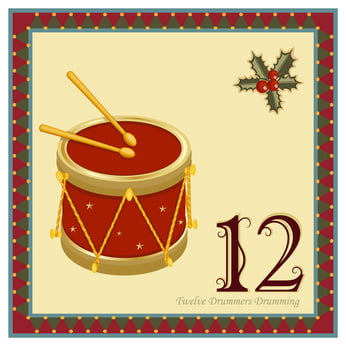
But in some parts of the world as well as many liturgical churches, Christmas Day is only the beginning of the Christmas season. I thought it might be an interesting journey for us to explore the idea of making the Twelve Days of Christmas (not the song, but the Christian celebrations from Christmas to Epiphany) a way of magnifying our Savior above all the other stuff. It seems to me those of us who are not from liturgical churches might benefit from such a journey.
In my previous blogs I made a feeble attempt to challenge us to find ways to make Christmas what it was intended to be when Christians first started celebrating it. Some of you have shared how you work hard to make Christmas about the exaltation and worship of our Savior rather than all the other things that have crowded that out.
Charles Dickens wrote at the conclusion of his famous story, A Christmas Carol, that Ebenezer Scrooge “knew how to keep Christmas well, if any man alive possessed the knowledge.” What does it mean to keep Christmas well, not just at Christmas or even the twelve days of Christmas, but for twelve months of the year?
I was intrigued by the way Mark Roberts, author of a daily devotional entitled, , has chosen to finish up the year with a series delving into the twelve-day celebrations and what it means to keep Christmas well. I want to share his blog with all you courageous grandparents as a way to stimulate your own thinking about this tradition as a way to help you teach your grandchildren about what Christmas really should be about. I encourage you to read each of Mark’s posts in this series. This is a good time to start the process of building some new traditions for next Christmas using the Twelve Days of Christmas idea.
For example, did you know that today (December 28th) is Holy Innocents Day on the liturgical Twelve Days of Christmas calendar? It is a day calling upon believers to remember Herod’s slaughter of the innocent children in Bethlehem after Jesus’ birth. That slaughter of innocent lives pre-shadowed the innocent and perfect sacrifice of our Savior and reminds us that we are not in control of our lives. Only God is. And it serves as a challenge to keep our responsibility to protect and fight for the millions of innocent lives that are killed in our world every year. This is why Christ came. Our grandchildren need to know that Christmas is more than a babe in a manger, Santa Claus, and Christmas decorations. The carols we sing celebrate a Savior who would defeat Satan and redeem us from sin and death.
Here is the link to Mark’s blog, .
COMMENT: I invite you to enter the conversation about how we can change the way we celebrate Christmas generation to generation. Have you ever used the Twelve Days theme in your family traditions? Share what you have done.